Kindergarten Program


Kindergarten Program (Ages 3–5)
Building Confidence for Lifelong Learning
The Kindergarten Program at Aristar International School provides children aged 3–5 with a happy, safe, and nurturing start to their educational journey. Guided by the British Early Years Foundation Stage (EYFS) framework, the program supports children’s holistic development through play-based learning, structured teaching, and real-life experiences.
Children build confidence, independence, communication, social-emotional, physical, and early academic skills through engaging activities such as role play, outdoor exploration, creative projects, phonics, counting, and early writing. Our supportive learning environment encourages curiosity, resilience, creativity, and a lifelong love of learning as children prepare for a successful transition to Primary school.
Teachers create a safe, caring, and engaging environment where every child feels valued, respected, and supported. Positive relationships, encouragement, and individual attention help children build self-esteem, resilience, and the confidence to explore, learn, and try new experiences independently.
Why Choose Kindergarten at Aristar?
- International curriculum based on EYFS
- Strong focus on school readiness and holistic development
- Balance of play-based and structured learning
- Development of communication, literacy, and numeracy skills
- Integration of English language and Thai culture
- Safe, supportive, and engaging learning environment
EYFS


Our EYFS Curriculum
At Aristar International School, our Kindergarten Program follows the British Early Years Foundation Stage (EYFS) framework, providing children with a strong foundation for lifelong learning. Through a fun, play-based approach combined with personalised learning experiences, we create a safe, nurturing, and engaging environment where every child can develop confidence, independence, creativity, and a love of learning.
Our experienced teachers support each child’s growth across the seven areas of learning and development within the British EYFS curriculum, nurturing confidence, independence, creativity, curiosity, and a lifelong love of learning.
The Three Prime Areas
The Prime Areas provide the essential foundation for children’s growth and future learning:
1.Communication and Language
Developing listening, understanding, speaking, and early communication skills.
2.Personal, Social and Emotional Development (PSED)
Building confidence, self-regulation, independence, positive relationships, and emotional wellbeing.
3.Physical Development
Strengthening coordination, balance, movement, and fine motor skills needed for writing and everyday tasks.
The Four Specific Areas
As children grow in confidence, they further develop through the Specific Areas of learning:
1.Literacy
Phonics, early reading, writing simple words, sentences, and developing a love for books.
2.Mathematics
1.Numbers: counting, recognising numbers, understanding quantity, and simple addition and subtraction.
2.Numerical Patterns: identifying patterns, comparing shapes, sizes, and amounts, and understanding sequences.
3.Understanding the World
Exploring people, cultures, technology, nature, and real-life experiences.
4.Expressive Arts and Design
Encouraging creativity and imagination through art, music, movement, storytelling, and role-play.
Through the British EYFS framework, children are encouraged to become confident, curious, and capable learners, developing the essential skills and positive attitudes needed for a successful transition into Primary school and lifelong learning.
A TYPICAL DAY AT AIS
Our youngest learners enjoy days filled with purposeful play, exciting experiences,
and joyful learning.
1.Helping a child settle into school requires consistency, reassurance, and a predictable routine to help them feel safe and confident. A warm, welcoming environment with supportive teachers and opportunities to play helps children build friendships and feel a sense of belonging.
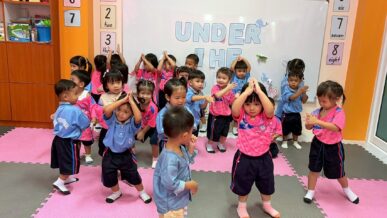
2.Rhyme time. We love music and rhyme, bringing children together through singing and dancing. Through rhymes and number songs, they develop early math, speaking, and listening skills. These joyful activities build confidence, language, and a love for learning.
3. Healthy Choices. One of our children favorite times of the day is lunch time. It is a great opportunity for your child to socialize with their friends and learn
about healthy eating. (Support with picture)
4. Learning through play. Next playtime with a twist. Children learn through hands-on, real-life experiences while developing critical thinking and problem-solving skills. (Support with picture)
5. Tell us a story- Storytelling in the Early Years Foundation Stage helps children develop language, imagination, and listening skills. It also builds confidence, creativity, and a love for reading.
HOW our early years children learn:
Our Three Principles of Effective Learning Aligned with the Early Years Foundation Stage, we support children to become confident and independent learners:
- Playing and Exploring (Engagement): Children are encouraged to try new things, explore freely, and solve problems through trial and error.
- Active Learning (Motivation): Children stay focused, keep trying when things are challenging, and take pride in their achievements.
- Creating and Thinking Critically (Thinking): Children develop their own ideas, make connections, and approach new challenges with confidence.
Language & Cultural Integration
- English is the main language of instruction
- Thai language, culture, and traditions are integrated into daily learning
Children develop strong communication skills, cultural understanding, and respect for diversity in a multicultural environment.
OUR CORE VALUES
Skills That Children Will Learn
Communication and Language (English)
-Listening and attention
-Understanding
-Speaking and oral communication
-Early reading skills
-Early writing development
Personal, Social and Emotional Development (HPES)
-Making relationships
-Self-confidence and self-awareness
-Managing feelings and behaviour
-Health and self-care
-Moving and handling (physical development)
Mathematics
-Numbers (counting, recognising, and early calculation)
-Shapes
-Space
-Measure
-Early problem solving and numeracy
Understanding the World (Geography, Science and Technology)
-People and communities
-The world and geography
-Science and exploration
-Technology and digital understanding
Expressive Arts and Design (Art and Music)
-Exploring and using media and materials
-Being imaginative and creative expression
Additional Language Development (Chinese and Thai)
-Listening skills
-Attention and concentration
-Oral communication
-Early writing skills
CARING FOR YOUR CHILD
We know that children learn best when they’re happy and supported, and our Early Years Centre is a place where every student feels like they belong.
Here, your child will explore, challenge themselves, and go on adventures. We
also teach our children about risks and safety, how to make good choices, and
to reflect our values of integrity, care, and respect.
A PURPOSE-BUILT LEARNING ENVIRONMENT
Our warm and welcoming Early Years Centre is a fantastic place to learn. In our soft-play area, sand pit, and playgrounds, our children are free to grow and explore, while shared learning spaces play host to incredible interactive activities. We also have sleeping rooms, a canteen, and a nurse’s station.
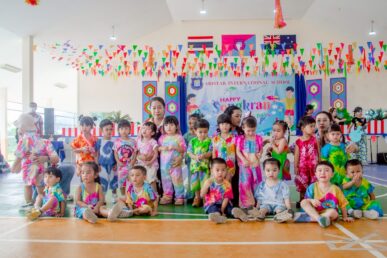
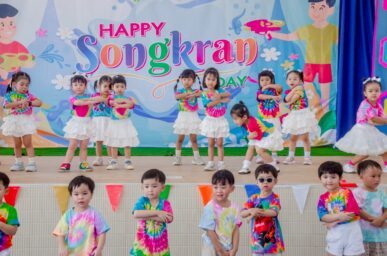
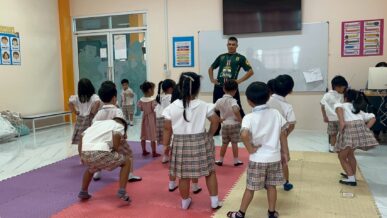
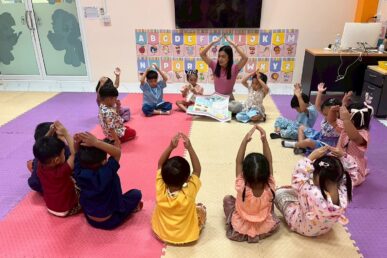
Kindergarten Class Activities
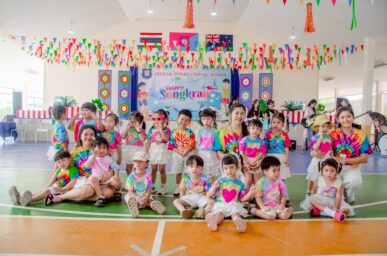
Kindergarten Activities show different interactive approaches used by teachers from pre k to k3 to ensure students are learning their concepts as well as improving their psychomotor, creative thinking, problem solving, social and emotional skills.
Through varied play-based activities, prepared by their dynamic teachers, students are able to enjoy learning and doing it with their friends.
Making it fun to be in school at all times.







Kindergarten (3-5 years)
- Application form submission
- Family and student assessments
- Result announcement
- Tuition fees payment
- A boy or a girl aged 3-6
- Not having serious communicable diseases or physical disabilities
- A photograph, taken not more than 6 months, size 1 inch, 3 pictures
- A copy of the children's birth certificate
- A copy of the national ID card of the father and mother
- A copy of the house registration of children, parents
- A copy of the name and surname change certificate (if any), which must match the house registration
- A copy of the registration certificate for adoption (In the case of adoption)
- Tuition Fees
- Term 1 : 31,300 THB
- Term 2 : 31,300 THB
- Term 3 : 31,300 THB
- Other Fees
- Student Uniform 1 set 500 THB
- Sports Uniform 1 set 500 THB