Secondary Program
Secondary (Years 7 – 10)
Aristar International School delivers a structured Secondary School curriculum from Years 7 to 10, aligned with the Australian Curriculum, Assessment and
Reporting Authority.
The Secondary Program builds upon primary education and represents the final stage of compulsory education, focusing on the development of students as independent learners and global citizens.
The program is designed to:
- Extend academic knowledge and skills across disciplines
- Develop critical, creative, and analytical thinking
- Support students in exploring them interests and strengths
- Build life skills, digital literacy, and global competencies
- Prepare students for senior secondary pathways and future careers
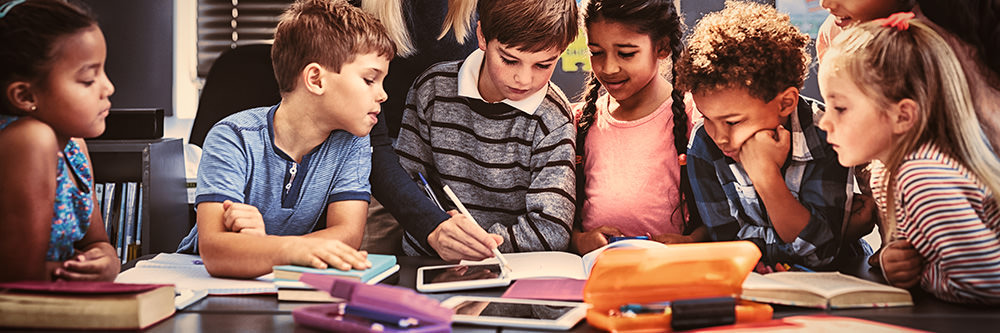
Teaching and learning emphasize interactive learning, enabling students to actively construct knowledge and apply learning in real-world contexts.
Students develop the knowledge, understanding, and skills required for life and work in the 21st century, including critical thinking, creativity, collaboration, and digital capability.
Vision of the Secondary Program
The Secondary Program aims to develop students who are:
- Knowledgeable and academically capable
- Critical and creative thinkers
- Ethical, responsible, and globally minded individuals
- Equipped with skills for lifelong learning
- Able to live and work successfully in a global society
Curriculum Principles
The curriculum is designed to:
- Place the learner at the center of all learning
- Support individual strengths, interests, and potential
- Develop thinking skills, life skills, and positive attitudes
- Provide diverse learning experiences for further education and careers
- Promote holistic development - intellectual, social, emotional, and ethical
Curriculum Goals
Students will:
- Develop knowledge and skills aligned with their abilities and interests
- Communicate effectively and solve problems using critical thinking
- Use technology effectively for learning
- Maintain physical and mental wellbeing
- Demonstrate self-discipline, confidence, and positive identity
- Appreciate culture, sustainability, and social responsibility
- Act as responsible citizens at local, national, and global levels
Curriculum Overview by Stage
Years 7–8
Focuses on consolidating foundational knowledge and introducing subject-specific disciplines.
Focus areas:
- Application of literacy and numeracy across learning areas
- Development of inquiry, reasoning, and analytical skills
- Collaboration and communication
- Digital literacy and responsible technology use
Years 9–10
Students deepen understanding and apply higher-order thinking while preparing for senior secondary pathways.
Focus areas:
- Abstract thinking and complex problem-solving
- Independent research and inquiry
- Evaluation of information and perspectives
- Application of knowledge across disciplines
English
Purpose:
English develops students’ ability to communicate effectively, think
critically, and engage with a wide range of texts across contexts.
Strands:
- Language
- Literature
- Literacy
Students develop:
- Critical interpretation and evaluation of texts
- Creation of analytical, persuasive, and imaginative texts
- Effective communication in spoken, written, and multimodal forms
Achievement Standard
- By the end of Secondary Program, students analyse how language features and text structures shape meaning. They create coherent texts and communicate effectively for different audiences and purposes.
Mathematics
Purpose:
Mathematics develops logical reasoning, problem-solving, and the ability to model and interpret real world situations.
Strands:
- Number and Algebra
- Measurement and Geometry
- Statistics and Probability
Students develop:
- Algebraic reasoning and generalization
- Mathematical modelling and representation
- Data analysis and interpretation
- Problem-solving and logical reasoning
Achievement Standard
By the end of Secondary Program, students apply mathematical concepts, reason logically, and communicate solutions using
appropriate representations.
Science
Purpose:
Science enables students to understand the natural world through inquiry, experimentation, and evidence-based reasoning.
Strands:
- Science Understanding
- Science Inquiry Skills
- Science as a Human Endeavour
Students develop:
- Experimental design and investigation skills
- Data analysis and evaluation
- Understanding of scientific concepts and systems
- Application of science to global and real-world issues
Achievement Standard
By the end of Secondary Program, students explain scientific concepts, conduct investigations, and evaluate evidence to make informed conclusions.
Humanities and Social Sciences (HASS)
Purpose:
HASS develops students’ understanding of societies, environments, and global systems, enabling informed and active citizenship.
Strands:
- History
- Geography
- Civics and Citizenship
- Economics and Business
Students develop:
- Inquiry and research skills
- Analysis of sources and perspectives
- Understanding of global interconnections
- Evidence-based reasoning and communication
Achievement Standard
By the end of Secondary Program, students analyse information, evaluate perspectives, and develop informed conclusions about social and global issues.
The Arts
Purpose:
The Arts enable students to express ideas creatively and engage with diverse cultural perspectives.
Strands:
- Visual Arts
- Music
- Drama
Students develop:
- Creative and critical thinking
- Artistic techniques and processes
- Interpretation and evaluation of artworks
- Performance and presentation skills
Achievement Standard
By the end of Secondary Program, students create and present artworks demonstrating technical and conceptual understanding and evaluate artistic works.
Health and Physical Education
Purpose:
Health and Physical Education support students in developing the knowledge and skills to lead healthy, active, and balanced lives.
Strands:
- Personal, Social and Community Health
- Movement and Physical Activity
Students develop:
- Physical performance and fitness
- Health literacy and decision making
- Personal and social responsibility
- Teamwork and leadership skills
Achievement Standard
By the end of Secondary Program, students evaluate health factors, apply movement skills, and demonstrate personal and social responsibility.
Technologies
Purpose:
Technologies prepare students to design, create, and evaluate solutions in a digital and rapidly changing world.
Strands:
- Digital Technologies
- Design and Technologies
Students develop:
- Computational thinking and coding
- Design processes and innovation
- Systems thinking and problem-solving Understanding of the impact of technologies
Achievement Standard
By the end of Secondary Program, students design and evaluate solutions using digital and design technologies, applying computational and design thinking.
Languages: Thai
Thai
Language and Thai Culture (Native Thai Program)
Purpose:
To develop advanced proficiency in Thai language and a deep understanding of Thai identity, culture, and society.
Strands:
- Language (reading, writing, speaking, listening)
- Literature
- Culture and Society
Students develop:
- Analysis and interpretation of texts
- Structured and analytical writing
- Formal communication skills
- Understanding of Thai culture and identity
Achievement Standard
By the end of Secondary Program, students analyse Thai texts, communicate effectively in written and spoken forms, and demonstrate understanding of cultural contexts.
Chinese Language
(Mandarin)
Purpose:
To develop communication skills in Mandarin and foster intercultural understanding.
Strands:
- Communicating
- Understanding
Students develop:
- Listening, speaking, reading, and writing skills
- Use of pinyin and Chinese characters
- Communication in practical contexts
- Understanding of cultural perspectives
Achievement Standard
By the end of Secondary Program, students communicate in Mandarin in familiar contexts, interpret texts, and demonstrate intercultural understanding.
21st Century Learning Focus
Across all learning areas, students develop key capabilities for future success,
including:
- Critical and creative thinking
- Collaboration and communication
- Digital literacy and innovation
- Ethical understanding and global awareness
- Self-management and lifelong learning skills
These capabilities are embedded through authentic learning experiences and real-world applications.
Student Development and Wellbeing
The program supports:
- Social-emotional learning
- Physical and mental wellbeing
- Ethical and moral development
- Leadership and responsibility
- Positive behavior and self-discipline
Co-Curricular Activities
Students participate in structured activities such as:
- Clubs and interest-based programs
- Creative and performing arts
- Sports and physical activities
These support holistic development and student engagement.
General Capabilities
The seven General Capabilities are embedded across all learning:
- Literacy
- Numeracy
- ICT Capability
- Critical and Creative Thinking
- Personal and Social Capability
- Ethical Understanding
- Intercultural Understanding
Cross-Curriculum Priorities
Students engage with:
- Australian and European Histories and Cultures
- Asia and Australia’s Engagement with Asia
- Sustainability
These priorities are integrated through meaningful and authentic learning contexts.